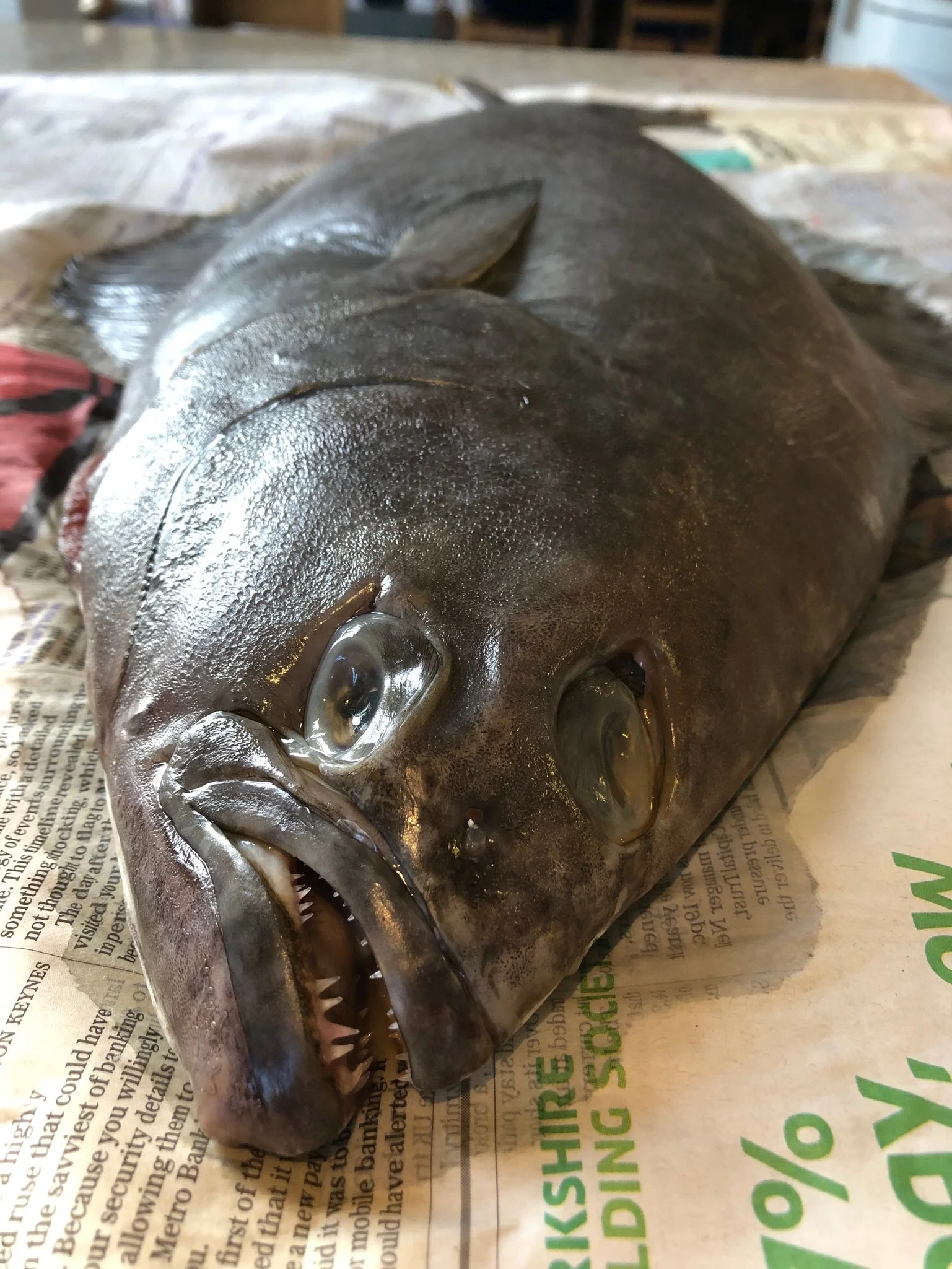
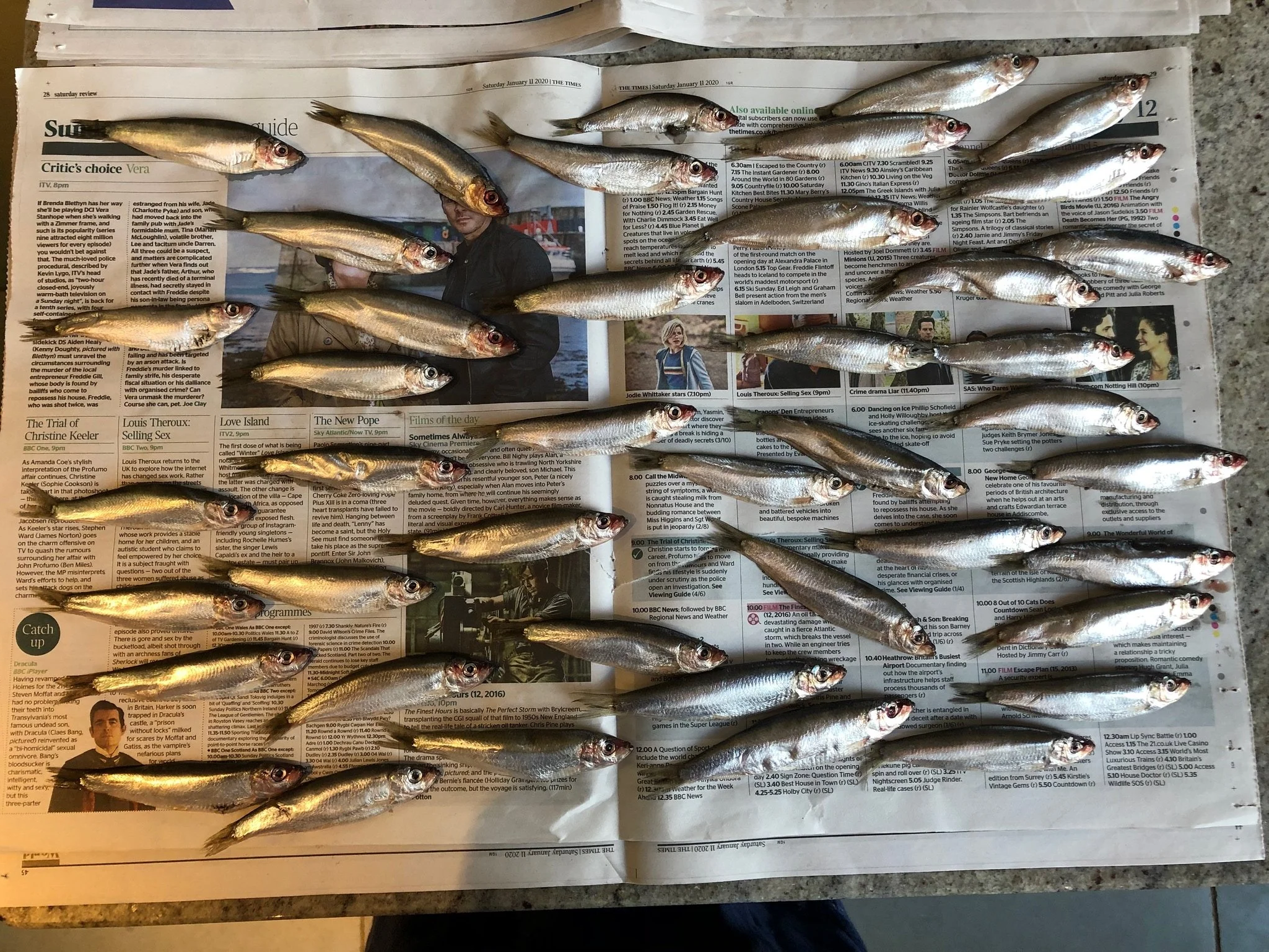
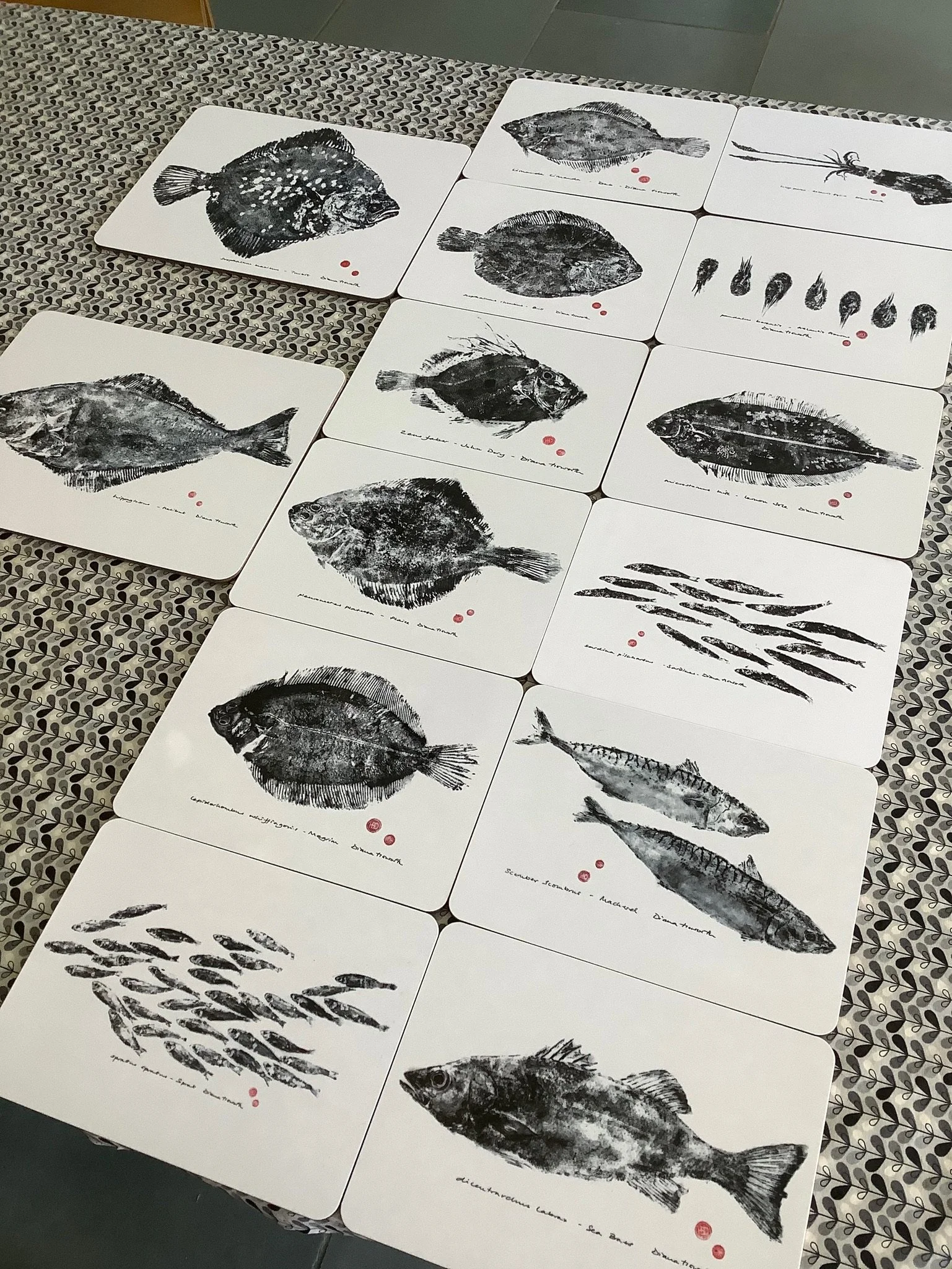
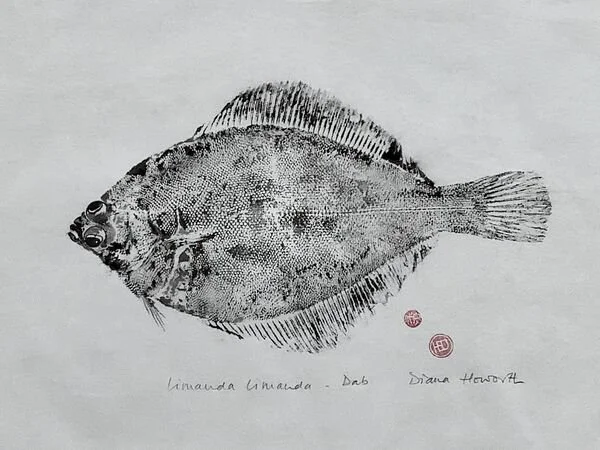
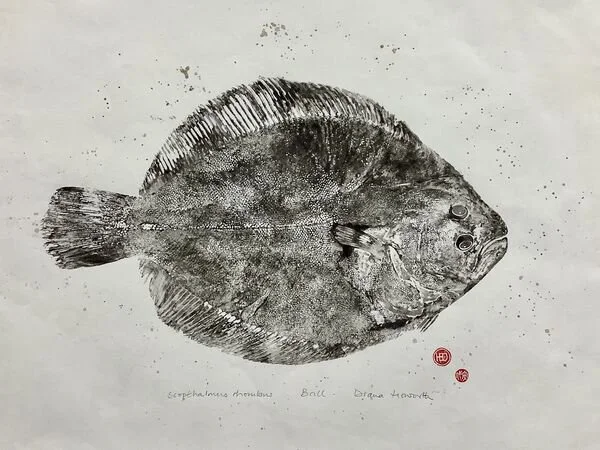
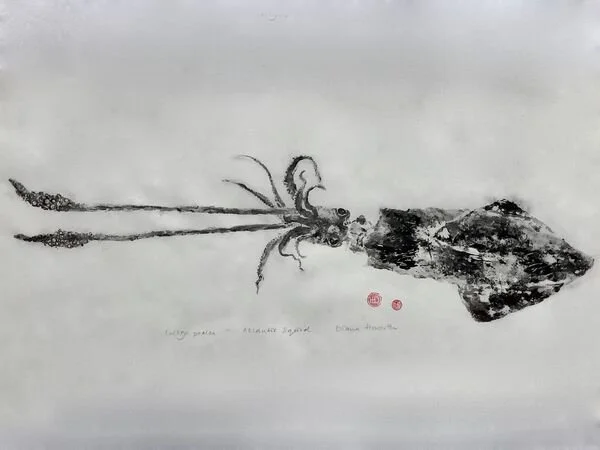
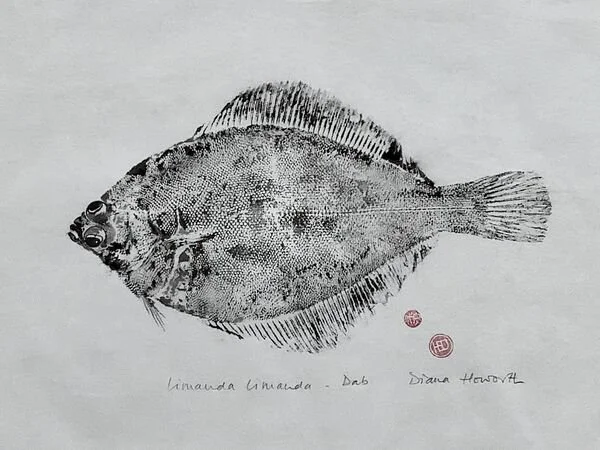
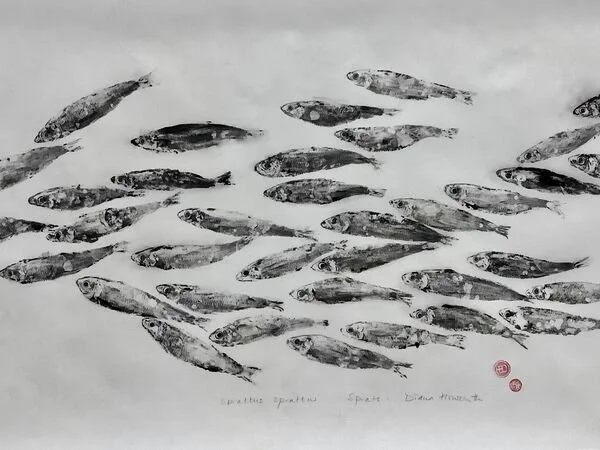
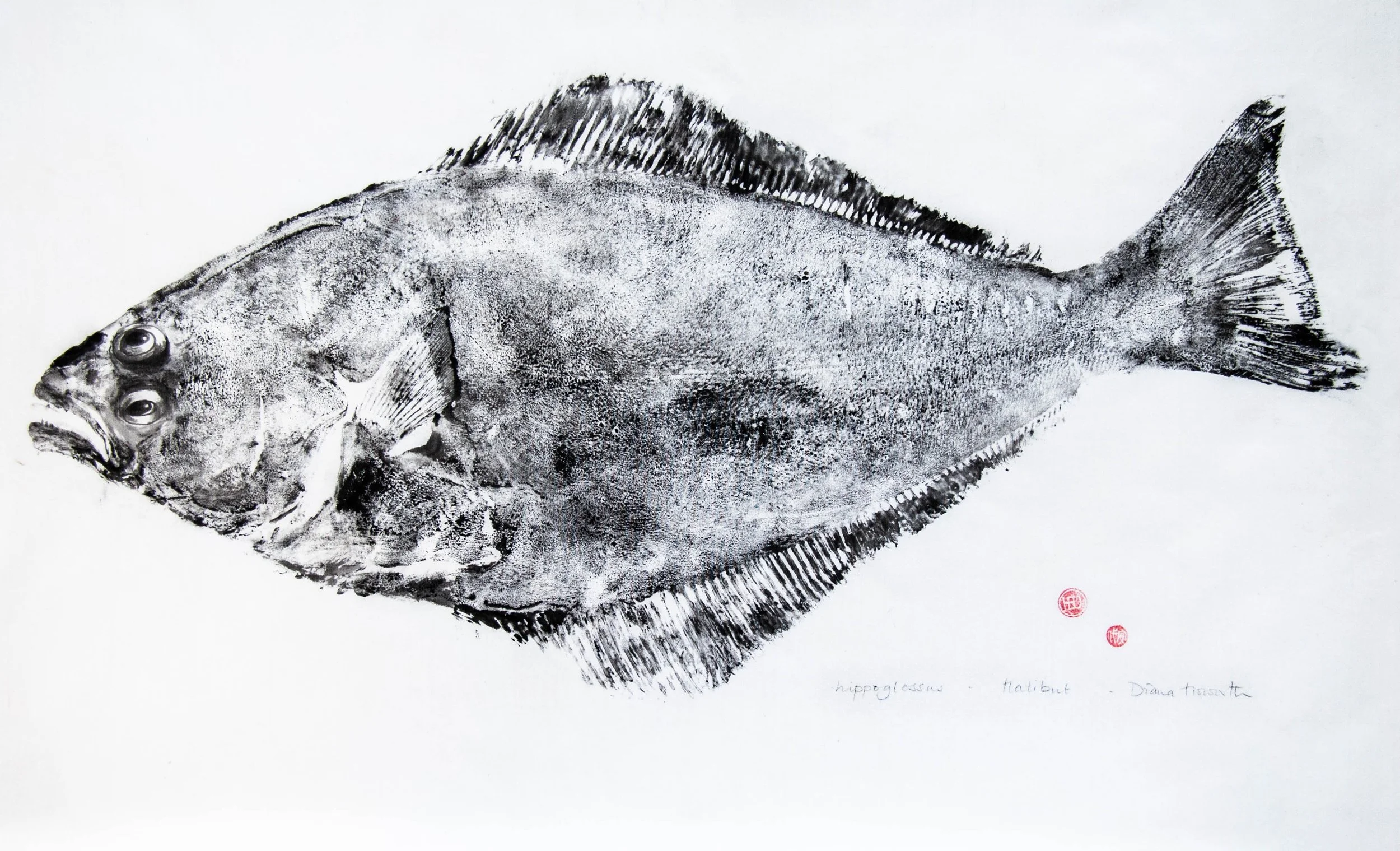
Gyotaku, literally "fish rubbing" is a Japanese printmaking tradition that began in the mid-nineteenth century, when fishermen recorded their catch by inking the fish and pressing paper or cloth against it. What started as a way of documenting a prize catch became, over time, an art form in its own right.
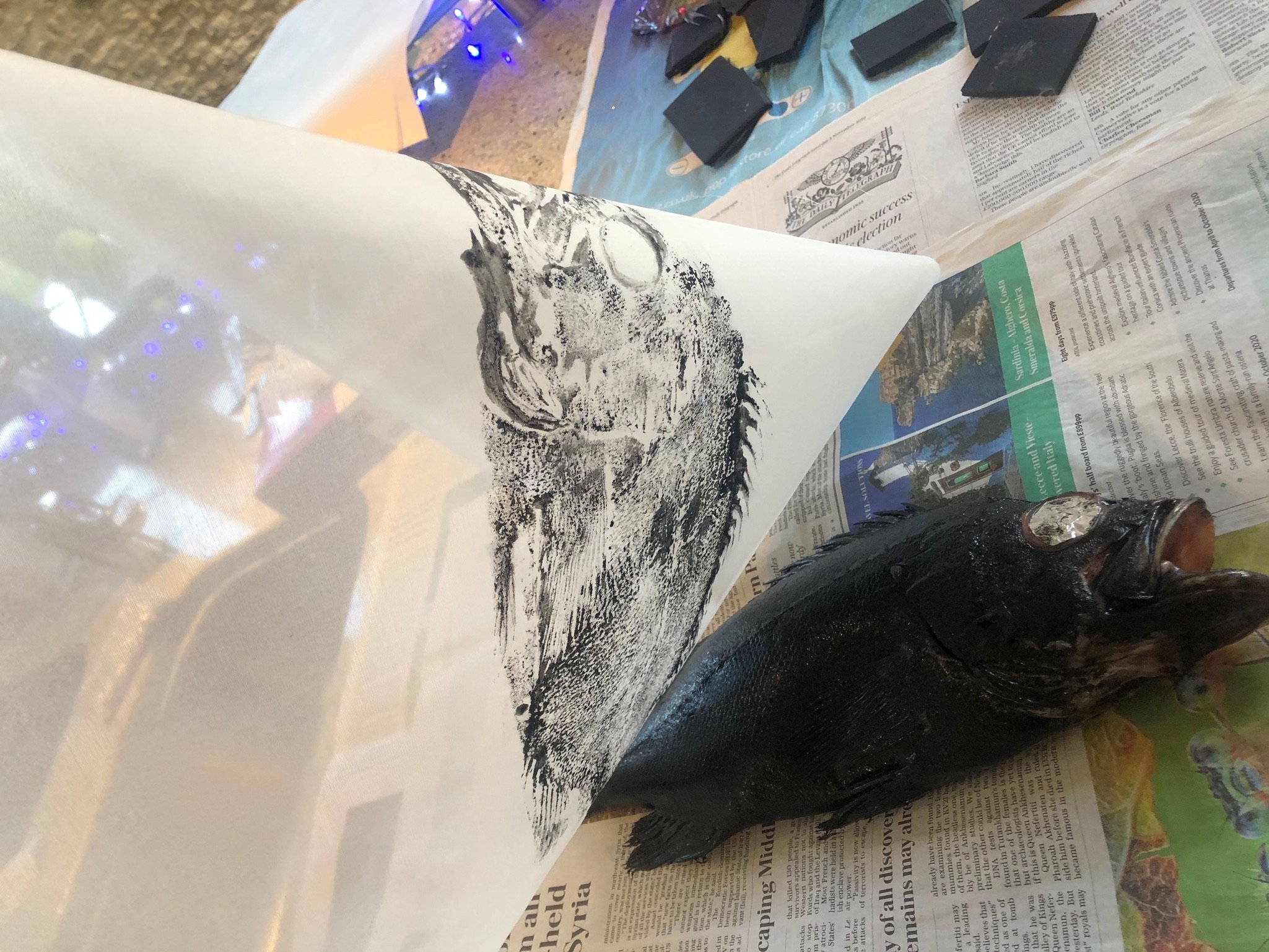
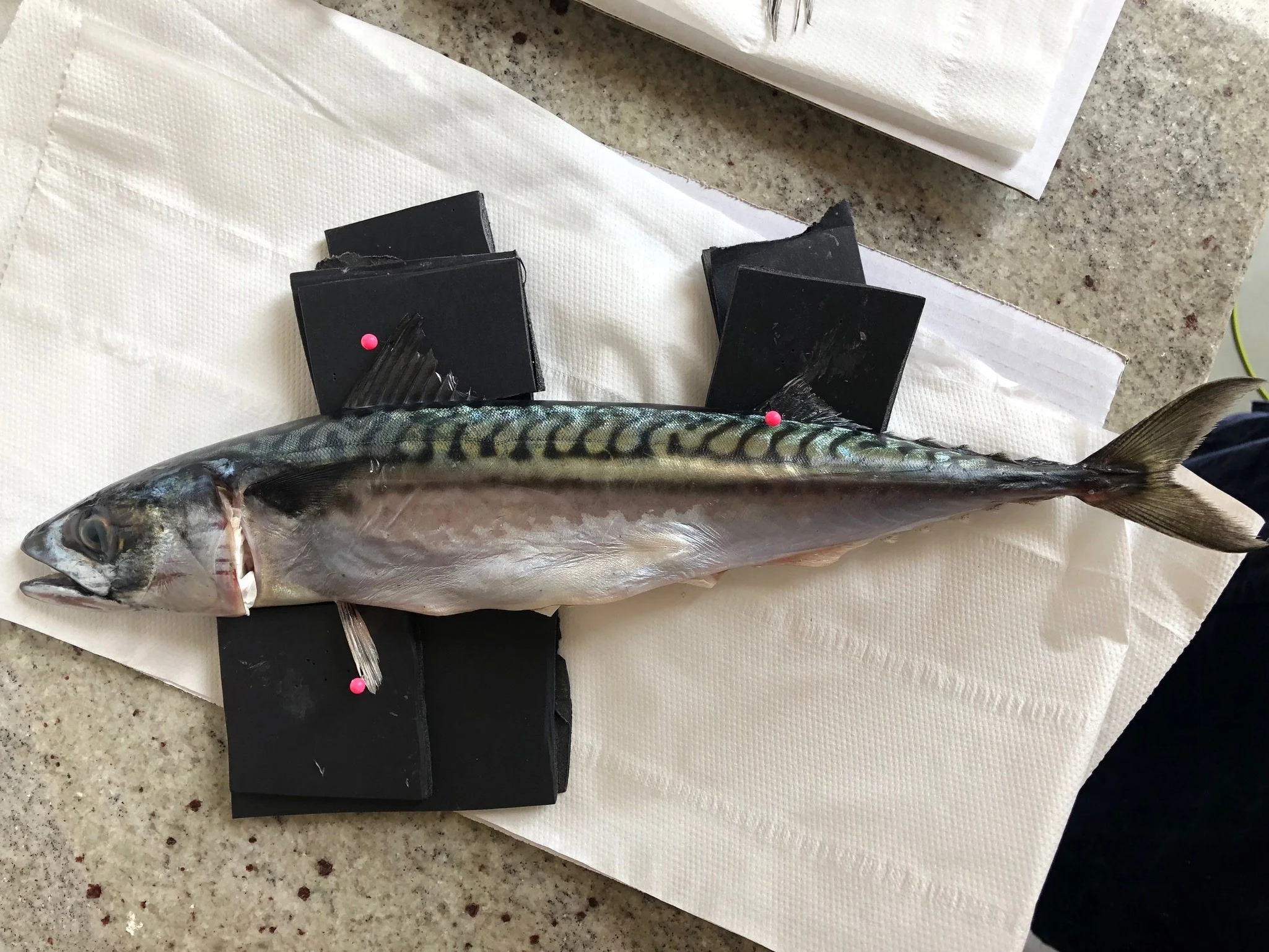
The process is direct and surprisingly intimate. The fish is cleaned and dried, ink or paint is applied by hand, and paper is laid over it and worked gently against every fin, scale and contour. Lifting the paper away always carries a small thrill, each print reveals the fish's exact form, down to the finest detail, yet no two impressions are ever quite the same. The eye is usually painted in afterwards, by hand, since it rarely prints well on its own.